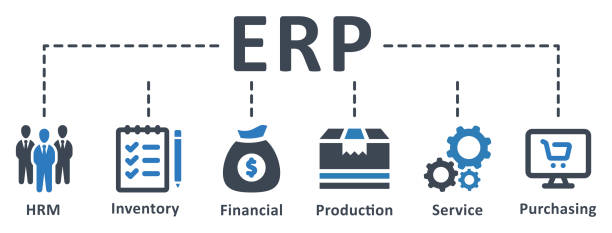

In the rapidly evolving digital era, businesses demand agility, scalability, and cost-effectiveness in their technology adoption. Enterprise Resource Planning (ERP) systems like Odoo have become critical in unifying business operations—from finance and HR to supply chain and customer relationship management. Traditionally, ERP customization and development required a significant amount of coding expertise, time, and resources. However, the emergence of low-code and no-code tools has transformed how businesses approach ERP development, customization, and integration.
Low-code and no-code platforms empower users with little to no programming experience to create, customize, and deploy applications with drag-and-drop interfaces, visual workflows, and prebuilt templates. In the context of Odoo ERP, these tools are becoming game-changers, enabling both developers and business users to accelerate implementation while reducing reliance on complex coding.
This blog explores how low-code and no-code (LCNC) tools are influencing Odoo ERP development, their advantages, challenges, and the future of ERP in a no-code-driven world.
What Are Low-Code and No-Code Tools?
Before diving into Odoo ERP automation , let’s clarify the difference between low-code and no-code:
-
Low-Code Development: These platforms provide a combination of drag-and-drop functionality and the ability to add custom code for advanced features. They target professional developers who want to build apps faster while retaining flexibility.
-
No-Code Development: These platforms rely purely on visual development, preconfigured logic, and automation. They’re designed for non-technical users—such as business managers or analysts—who need to build apps without writing a single line of code.
Examples of popular LCNC platforms include Mendix, OutSystems, Zoho Creator, and Microsoft Power Apps. Within the Odoo ecosystem, several community-driven modules, integrations, and third-party apps mimic this approach, reducing the technical barrier for customization.
Why Are LCNC Tools Relevant to Odoo ERP Development?
Odoo ERP is open-source, highly modular, and flexible. While this makes it extremely powerful, it also means that customizing it to fit a business’s exact needs can require extensive coding knowledge in Python, XML, and JavaScript. For small and mid-sized businesses, this becomes a challenge since not every organization has an in-house development team.
This is where LCNC tools become relevant:
-
Accelerated Customization – Users can quickly tailor Odoo workflows, dashboards, and reports without needing advanced coding.
-
Reduced Development Costs – Non-technical staff can take charge of simple modifications, reducing dependency on external developers.
-
Improved Agility – Businesses can respond faster to market changes by deploying updates and new features without lengthy development cycles.
-
Collaboration Between IT and Business Teams – LCNC tools enable business users to co-create solutions alongside technical teams, bridging communication gaps.
How LCNC Tools Are Changing Odoo ERP Development
1. Simplifying Module Development
Traditionally, creating a new module in Odoo required coding expertise. With LCNC integrations, businesses can now design forms, workflows, and approval systems using visual builders. For example, HR teams can create custom leave approval workflows or recruitment pipelines without waiting for developer bandwidth.
2. Enhancing Workflow Automation
Odoo already has a powerful automation engine, but LCNC tools make it more accessible. With drag-and-drop workflow designers, users can automate repetitive tasks—such as sending invoices, updating CRM leads, or generating reports—without diving into backend logic.
3. Easier Integration with Third-Party Apps
Integrating Odoo with external apps like Slack, Shopify, or Salesforce can be complex. No-code integration platforms (like Zapier or Integromat/Make) simplify this process, allowing businesses to set up connectors through a visual interface. This reduces the need for custom APIs and middleware development.
4. Rapid Prototyping and Proof of Concept
With LCNC tools, businesses can test ideas quickly by building prototypes inside Odoo before committing to full-scale custom development. This minimizes risks and accelerates decision-making.
5. Democratizing ERP Customization
One of the most significant shifts is that customization is no longer exclusive to developers. Business managers, analysts, and even end-users can configure their Odoo ERP system with minimal IT involvement, fostering innovation and ownership across teams.
Key Benefits of LCNC in Odoo ERP Development
-
Speed to Market – Solutions that once took months to build can now be deployed in weeks or even days.
-
Cost-Effectiveness – Organizations save on hiring or outsourcing developers for every small customization.
-
Flexibility – Business users can adapt ERP processes on the fly, improving responsiveness.
-
Empowerment of Non-Technical Teams – Employees with domain expertise can contribute to ERP improvements without relying on coding.
-
Increased Innovation – Since experimentation becomes easier, businesses can explore more innovative processes and workflows.
Challenges and Limitations
Despite the benefits, LCNC in Odoo ERP development is not without challenges:
-
Complex Customizations Still Require Coding – Low-code and no-code solutions work best for simple workflows and UI changes. Deep customizations (like advanced AI integration or unique backend logic) still need professional coding.
-
Security Risks – If non-technical users make unauthorized modifications, it can compromise system security and data integrity.
-
Scalability Concerns – No-code tools may struggle with highly complex enterprise-grade requirements.
-
Vendor Lock-In – Relying too heavily on third-party LCNC platforms can lead to dependency and higher costs in the long run.
-
Governance and Standardization – Without proper oversight, businesses may face inconsistencies in workflows and data processes created by different departments.
The Future of LCNC and Odoo ERP
The integration of AI, cloud computing, and IoT with Odoo ERP is accelerating. LCNC tools will play a critical role in shaping this future:
-
AI-Driven Development – AI-powered no-code assistants will recommend workflows, build dashboards automatically, and even predict process improvements.
-
Industry-Specific Templates – Prebuilt LCNC templates for industries like healthcare, retail, and manufacturing will reduce implementation time.
-
Hybrid Development Models – Businesses will combine LCNC for front-end workflows with traditional coding for backend logic, creating a balanced development approach.
-
Greater Accessibility in the Cloud – As more businesses adopt cloud-based Odoo deployments, LCNC tools will ensure remote teams can collaborate on ERP customization seamlessly.
Best Practices for Adopting LCNC in Odoo Development
-
Start Small – Begin with simple workflows and dashboards before scaling to larger ERP processes.
-
Define Governance Policies – Establish rules for who can create, modify, and deploy changes to avoid inconsistencies.
-
Train Teams – Provide training sessions so business users understand how to leverage LCNC tools effectively.
-
Combine with Professional Development – Use LCNC for quick wins but rely on developers for mission-critical or complex requirements.
-
Monitor and Evaluate – Continuously track performance and security implications of LCNC-built modules.
Conclusion
Low-code and no-code tools are revolutionizing Odoo ERP development, shifting the power of customization from developers alone to a wider group of users. By enabling faster deployment, reducing costs, and empowering non-technical staff, LCNC platforms make ERP systems like Odoo more accessible and adaptable. However, businesses must balance the convenience of no-code with the robustness of traditional coding to avoid security, scalability, and governance pitfalls.
As Odoo continues to evolve, the synergy between open-source flexibility and LCNC accessibility will shape the future of ERP systems—making them not only powerful but also democratized, collaborative, and innovation-driven.